Tracing the Lineage from Traditional Archery Competitions to Precision Aiming Systems in Contemporary First Person Shooters
Avery Schröder · May 18, 2026
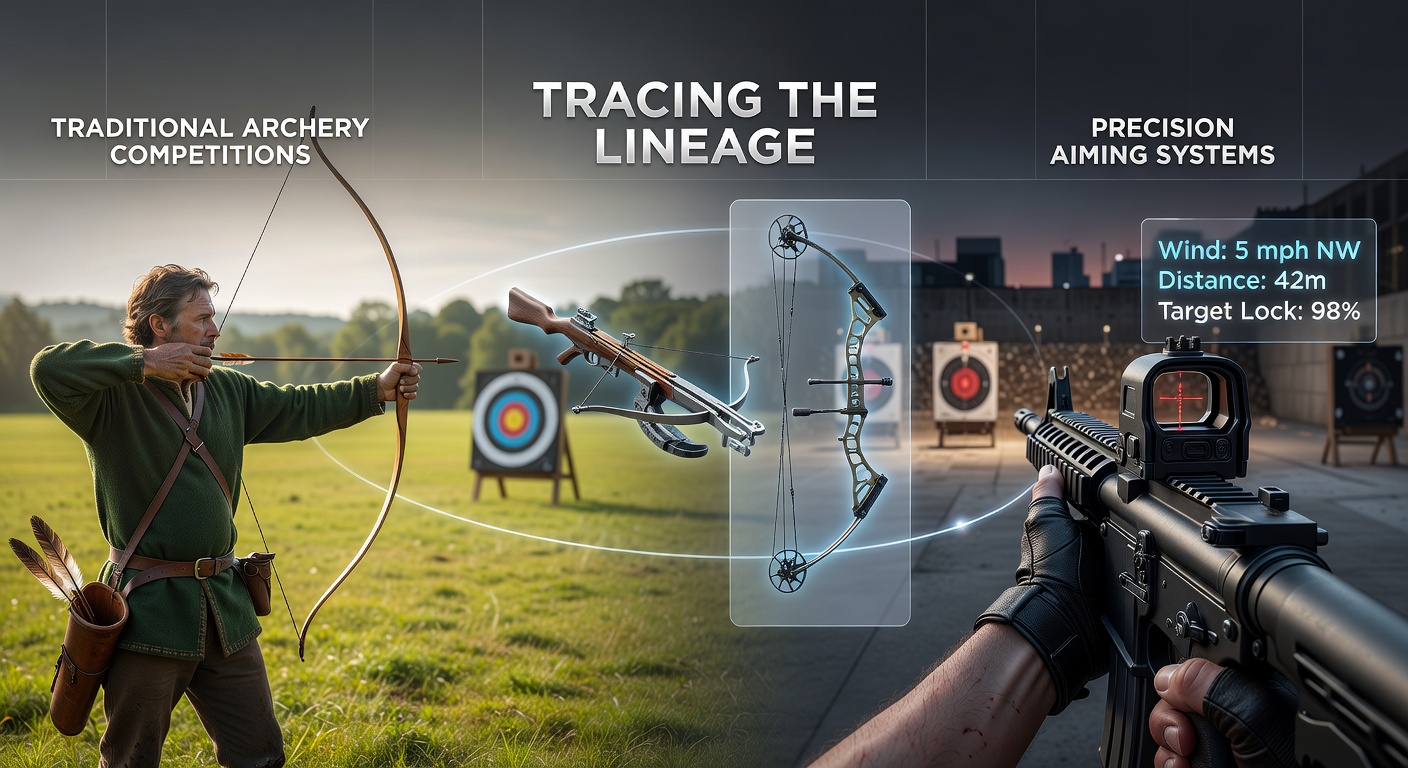
Tracing the Lineage from Traditional Archery Competitions to Precision Aiming Systems in Contemporary First Person Shooters
Roots in Ancient and Medieval Archery Practices
Archery competitions trace back thousands of years to organized events in ancient civilizations where participants honed skills through target shooting and distance trials, and these gatherings established foundational principles of precision, consistency, and environmental adaptation that later shaped digital aiming mechanics. In medieval Europe longbow tournaments required archers to account for wind, arrow weight, and draw length while maintaining steady holds, and similar practices appeared in Asian traditions such as Japanese yabusame where mounted riders aimed at targets during high-speed passes. Researchers at institutions across Asia and North America have documented how these early contests emphasized muscle memory and visual alignment, elements that parallel the crosshair control seen in today's first-person shooters.
Evolution Through Renaissance and Early Modern Target Shooting
By the Renaissance period archery evolved into more structured matches across England and continental Europe, where guilds organized contests that rewarded accuracy over power alone, and competitors adjusted for variables like humidity and light that affected arrow flight paths. Data from historical records maintained by European heritage organizations shows participation grew steadily through the 17th and 18th centuries as firearms began to supplement bows yet archery retained its status as a test of fine motor control. Observers note that these events introduced scoring systems based on ring proximity, much like the hit registration algorithms that determine success in contemporary shooters, and the emphasis on repeatable form carried forward into 19th-century Olympic revival competitions.
Transition to 20th Century Sports and Simulation Training
Twentieth-century archery federations standardized equipment and rules, leading to international events that incorporated mechanical sights and stabilizers, and athletes trained with methods that broke down aiming into sequential micro-adjustments. Studies published by university programs in Australia and Canada indicate these techniques improved grouping consistency by measurable percentages, and military simulation programs later adapted similar drills for marksmanship instruction. As personal computing advanced in the 1980s and 1990s developers drew upon these established aiming protocols when creating early first-person perspectives, translating physical draw-and-release sequences into mouse or controller inputs that rewarded gradual tracking over sudden flicks.
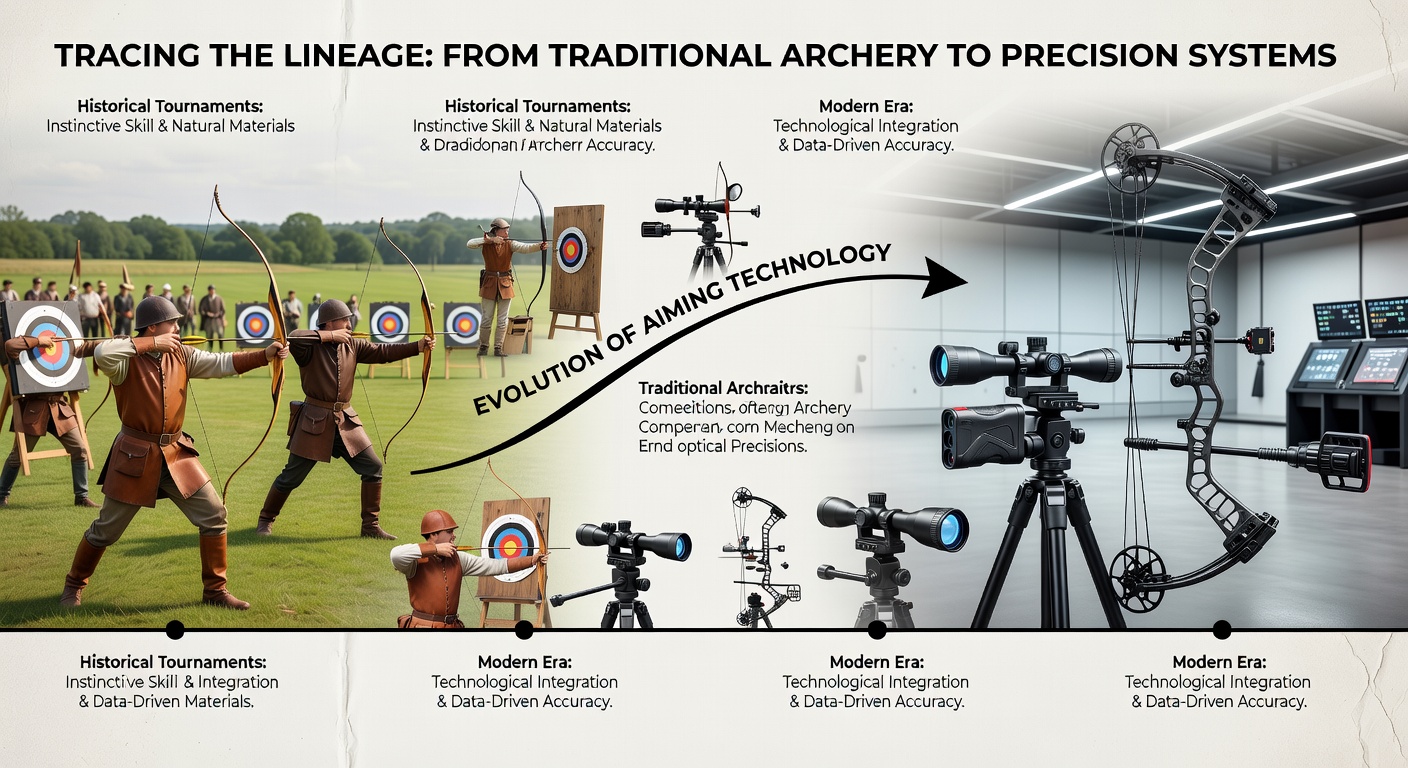
Game designers incorporated recoil patterns and bullet drop that echo the parabolic trajectories archers have managed for centuries, while sensitivity curves in titles from the late 1990s onward allowed players to replicate the fine wrist and forearm movements once used to center a bow sight. Industry reports compiled by North American trade associations highlight how professional circuits began hosting aim-trainer events by the mid-2010s, events that directly reference historical target distances and scoring zones from archery meets.
Contemporary FPS Aiming Mechanics and Historical Parallels
Modern first-person shooters such as those dominating global leaderboards in 2026 feature precision aiming systems that layer multiple variables including scope magnification, sway simulation, and movement penalties, and these layers build upon the same environmental calculations traditional archers performed instinctively. Tournament data from events scheduled for May 2026 across European and Asian venues reveal that top performers maintain accuracy metrics comparable to elite archers under controlled conditions, with crosshair placement routines that mirror the pre-draw alignment steps documented in classical training manuals. Academic analyses from research centers in the United States and the European Union have mapped input device latency against historical reaction benchmarks, showing that optimized setups reduce deviation in ways that parallel stabilizer technology introduced to archery in the 1970s.
Professional players often study footage of Olympic archery finals to refine their own hold times and micro-corrections, and software tools now quantify aim consistency using heatmaps that resemble archery target groupings. Figures released by international gaming research bodies indicate steady growth in aim-training platform subscriptions since 2020, driven by communities that explicitly connect their routines to centuries-old marksmanship lineages rather than treating digital aiming as an isolated skill set.
Conclusion
The progression from traditional archery competitions to precision aiming systems in current first-person shooters reflects a continuous refinement of human visual-motor coordination across centuries and media. Equipment changes and rule evolutions in both physical and virtual domains have preserved core demands for steady alignment and adaptive correction while introducing new layers of data feedback and customization. Observers across continents continue to document these parallels through performance metrics and historical comparison, underscoring how foundational practices established in pre-industrial target fields remain embedded in the algorithms and training methods that define competitive play today.