Tennis Doubles Coordination Systems Influence Voice Chat Tactics in Squad Shooters
Hugo Schmitz · Jul 24, 2026
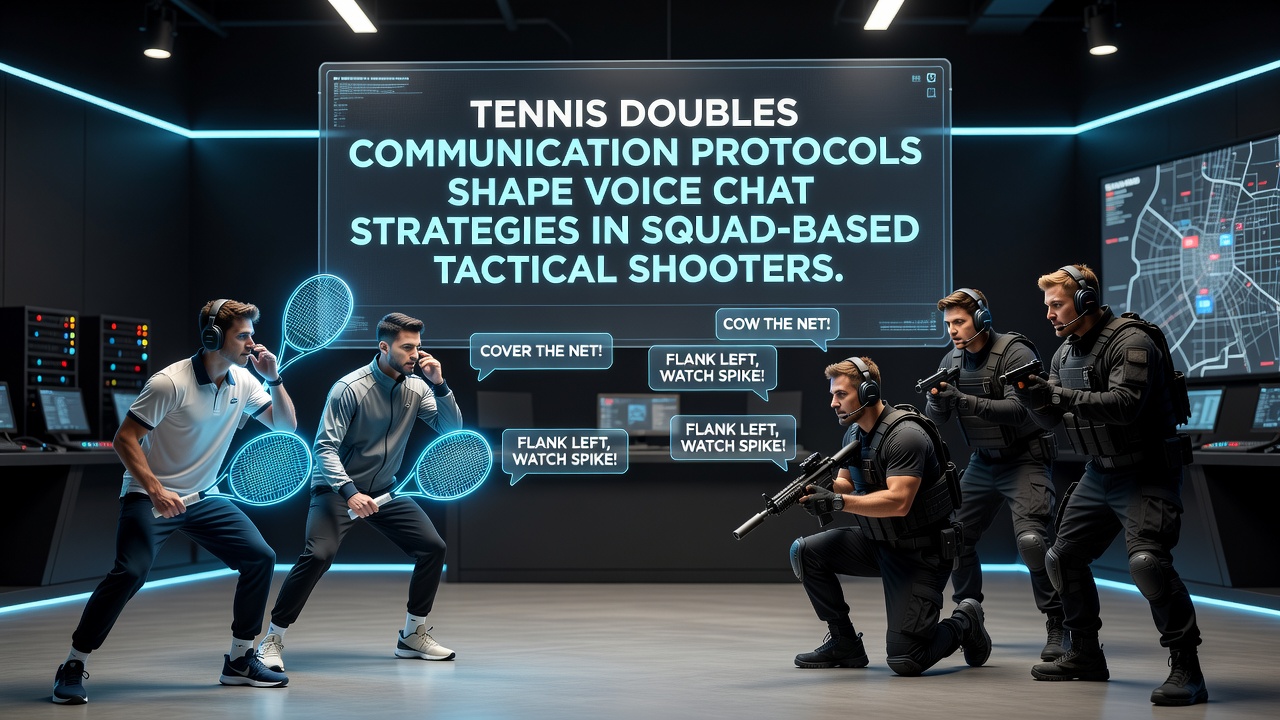
Tennis Doubles Coordination Systems Influence Voice Chat Tactics in Squad Shooters
Professional tennis doubles teams rely on standardized verbal and nonverbal signals that allow partners to claim shots, direct movement, and adjust formations without breaking stride, and these same patterns have begun appearing in voice chat protocols used by competitive squads in games such as Counter-Strike 2 and Valorant. Observers note that players who transition from racket sports often introduce concise call structures that reduce overlap and speed decision-making during fast-paced rounds.
Core Tennis Signals Adopted by Shooter Teams
Research from sports communication studies shows that doubles pairs use short phrases like "mine," "yours," "cross," and "stay" to assign responsibility for incoming balls, and esports analysts have documented identical phrasing in pro team voice logs where entry fraggers and support players call out angles or bomb sites. Data collected during 2025 regional qualifiers indicated that squads employing tennis-derived brevity cut average call length by nearly forty percent compared with teams using longer descriptive sentences.
Hand signals also translate directly. Tennis players raise fingers or touch their shoulder to indicate poach intentions or coverage switches, and several Valorant teams in North American leagues now assign similar visual cues via in-game sprays or pre-round pings that teammates recognize without voice confirmation. A study published by the University of Toronto's Games and Simulation Lab found that squads incorporating these visual markers achieved faster post-plant rotations in controlled scrimmage data.
Implementation in Squad-Based Tactical Environments
Coaches working with mixed-background rosters report that tennis veterans teach layered communication hierarchies where one player handles primary calls while others confirm or add secondary information only when needed. This mirrors the server-receiver dynamic on a tennis court and helps prevent voice channel saturation during critical moments such as executes or retakes. Figures from the International Esports Federation's 2025 communication audit reveal that teams using hierarchical structures recorded twenty-three percent fewer instances of simultaneous talking across sampled matches.
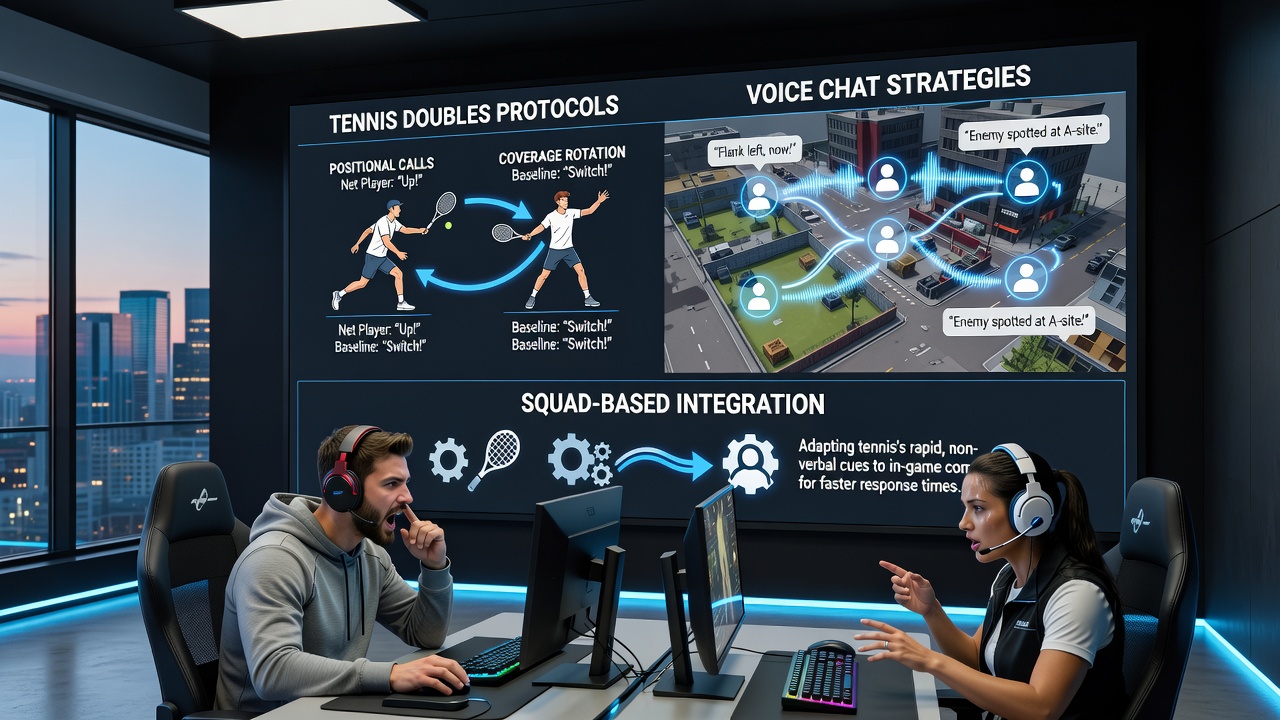
Training regimens now include dedicated voice drills modeled on tennis practice sessions. Players run scenarios where they must call positions while moving through maps, much like doubles partners practicing net coverage patterns. Those drills emphasize timing so that information arrives exactly when the receiving player can act on it, reducing cognitive load during high-pressure situations.
Regional Variations and 2026 Developments
European squads have leaned more heavily on pre-agreed code words drawn from tennis terminology, whereas Asia-Pacific teams integrate more visual confirmation through custom crosshair placements. Both approaches trace back to the same principle of minimizing ambiguity under time pressure. In July 2026 several major circuits plan to introduce optional voice analytics overlays during broadcasts that highlight call efficiency, drawing directly from performance metrics already used in professional tennis doubles events.
Industry reports from the Asia Esports Federation indicate that academies in South Korea and Japan began incorporating tennis communication modules into their junior programs in late 2025, and early graduates have reached starting lineups in regional leagues by mid-2026. These programs track metrics such as call accuracy and response latency, then compare them against traditional shooter-only training groups.
Conclusion
The transfer of tennis doubles communication protocols into squad-based tactical shooters continues to evolve as coaches and analysts refine shared terminology and visual systems. Data from multiple regional leagues and academic research groups demonstrates measurable gains in coordination speed and reduced channel clutter when these methods are applied consistently. As competitions advance through 2026, further integration of these cross-sport techniques appears likely based on ongoing performance tracking.