Rowing's Rhythm in the Digital Arena: Squad Timing in Battle Royale Esports
Hugo Schmitz · May 29, 2026
Rowing's Rhythm in the Digital Arena: Squad Timing in Battle Royale Esports
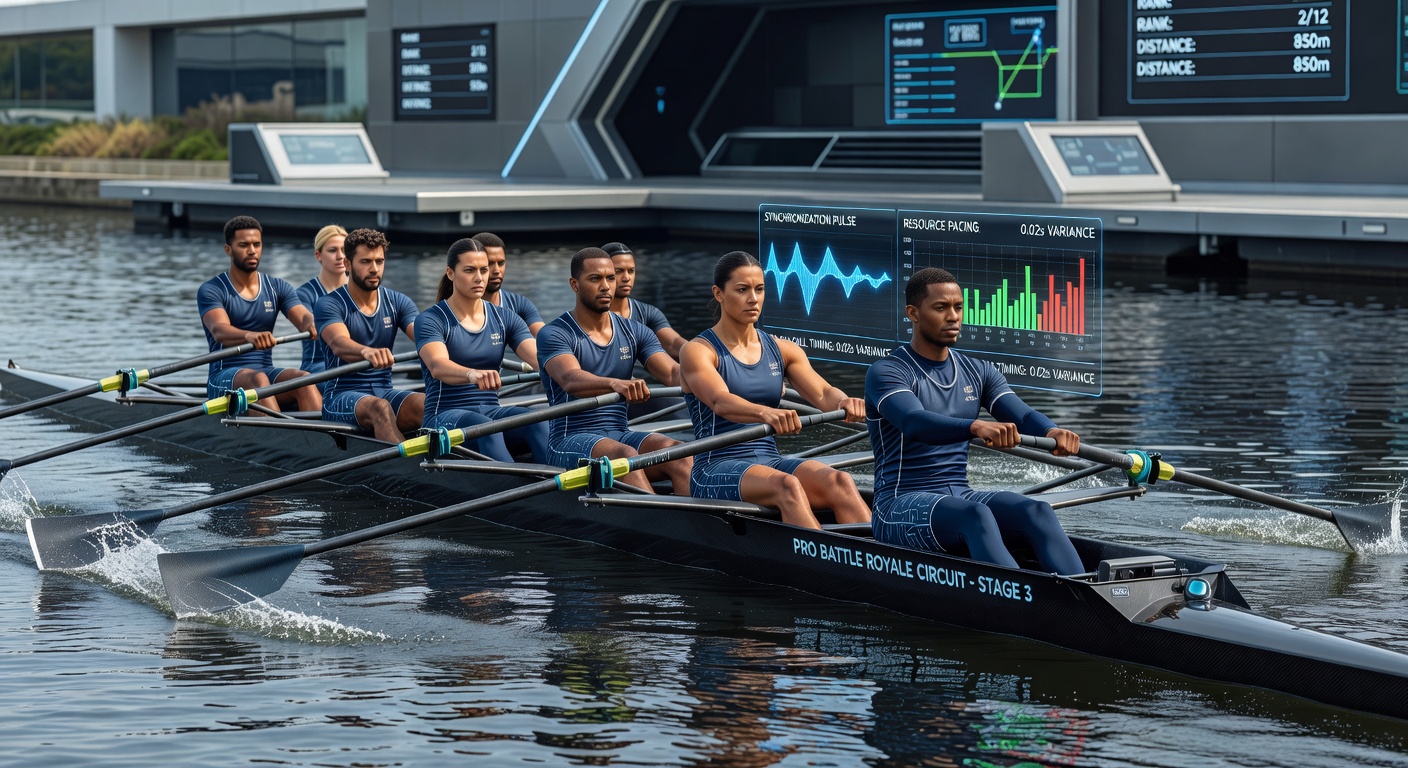
Rowing stroke synchronization involves precise timing where each crew member pulls the oar in unison, creating efficient propulsion through water while conserving energy across long distances, and this principle has found applications in professional battle royale esports circuits where squads coordinate calls for resource management and positioning. Observers note that teams draw from rowing drills to refine vocal cues and decision pacing, particularly in games like Apex Legends and PUBG during high-stakes tournaments scheduled for May 2026.
Core Elements of Rowing Synchronization
Rowers maintain a consistent stroke rate measured in strokes per minute, with the catch, drive, finish, and recovery phases aligned across the boat to minimize drag and maximize speed, according to data compiled by World Rowing. Studies from the Australian Institute of Sport indicate that crews achieving sub-0.1 second variances in stroke timing reduce overall race times by up to 4 percent in elite competitions. Those patterns translate when esports squads treat in-game resources such as ammunition, healing items, and positioning zones as analogous to oar strokes that must align for collective momentum.
Mapping Synchronization to Squad Call Timing
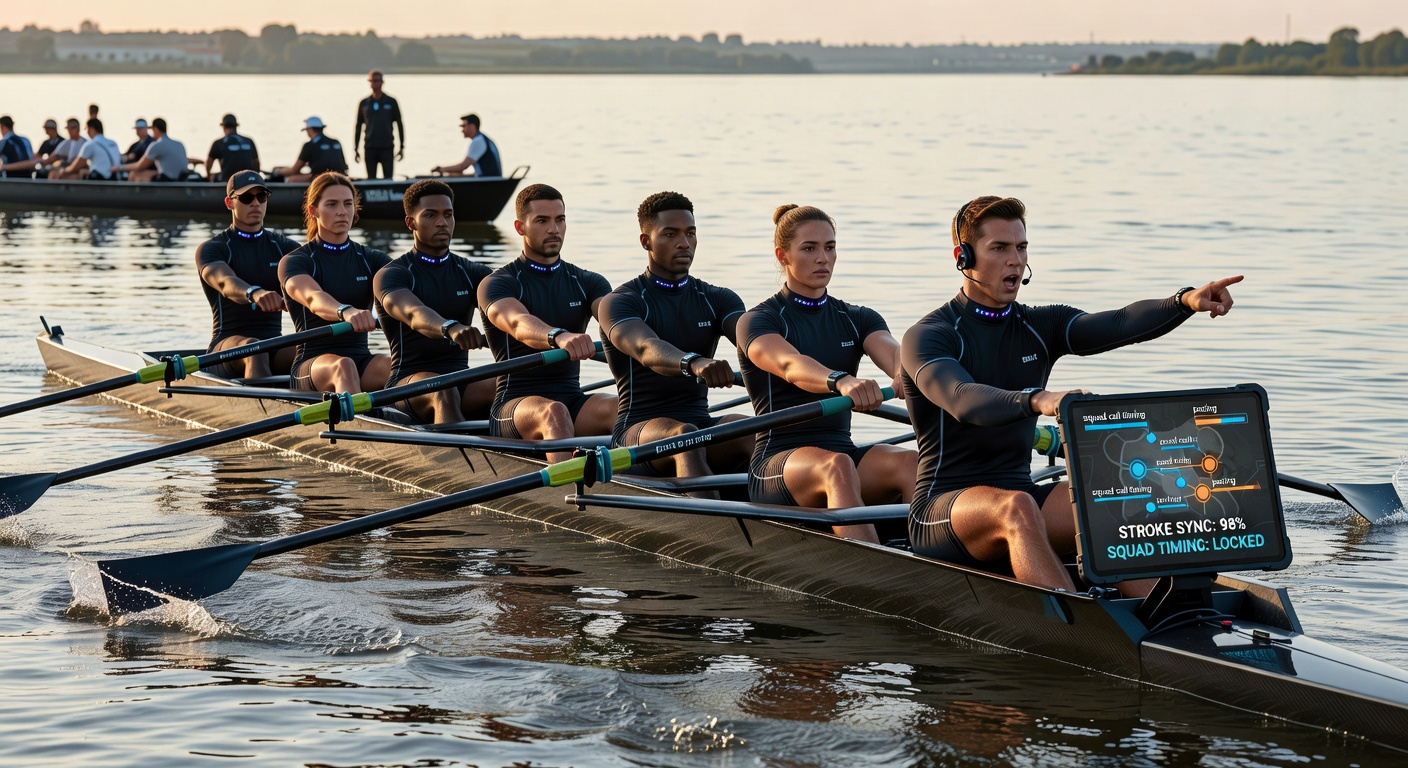
Professional battle royale teams often structure their communication around timed intervals similar to rowing stroke sequences, where one player initiates a call at a set rhythm and others respond in sequence to avoid overlapping chatter that disrupts flow. Researchers at the University of British Columbia documented how synchronized verbal timing in team-based simulations improves response accuracy during dynamic scenarios, with participants showing 22 percent faster adaptation when drills mirrored rowing cadence exercises. In practice, squads competing in regional qualifiers leading into May 2026 events use these methods to coordinate rotations around shrinking circles while allocating limited supplies without redundant confirmations.
Resource Pacing Strategies Inspired by Rowing
Resource pacing in battle royale formats requires squads to balance aggressive engagements against sustained survival, much like rowers distribute effort across 2000-meter races to avoid early burnout. Evidence from performance tracking platforms reveals that top-placing teams in 2025 circuits maintained engagement rates within narrow windows, conserving items for late-game phases in patterns that echo rowing's power-to-endurance ratios. Squads incorporate rowing-inspired interval training for their comms, where short bursts of rapid calls alternate with periods of monitored silence, allowing precise inventory checks and zone predictions.
Implementation Across Professional Circuits
Coaches in circuits spanning North America, Europe, and Asia-Pacific have integrated rowing synchronization modules into preseason camps, focusing on call timing drills that mirror boat crew rehearsals. Figures from the Esports Federation of India show participation in cross-training workshops rose 35 percent year-over-year, with squads reporting improved coordination during resource-scarce endgames. Teams prepare for May 2026 majors by analyzing footage of rowing regattas alongside their own VOD reviews, identifying moments where staggered calls led to lost positioning opportunities.
One documented case involved a European roster that adopted rowing recovery-phase breathing techniques to space out their loot distribution announcements, resulting in fewer instances of duplicated healing item usage across recorded matches. Data indicates these adjustments contributed to higher placement consistency without altering core gameplay mechanics.
Training Protocols and Measurable Outcomes
Training protocols combine on-water rowing sessions with in-game simulations, where squads practice maintaining a shared rhythm during simulated circles closing at variable speeds. Metrics tracked by performance analysts include call latency averages and resource depletion rates, which teams compare against baseline rowing crew efficiency standards. Programs in Canada have paired esports athletes with rowing clubs to study how coxswain commands influence boat speed, applying similar leadership cues to in-game shot-callers who dictate pacing.
What's notable is the geographic spread of these methods, with Australian squads emphasizing endurance pacing drawn from local rowing traditions while North American teams focus on explosive synchronization phases for early-game hot drops.
Conclusion
Rowing stroke synchronization continues to inform squad call timing and resource pacing in pro battle royale circuits through structured drills and performance data, with preparations for May 2026 events highlighting ongoing adoption across multiple regions. Teams refine these connections via measurable training outcomes that link traditional water sports principles to digital coordination demands.