Precision Peripherals: Sensor Technology Tracking Micro-Adjustments in Professional FPS Aiming
Hugo Schmitz · Aug 17, 2026
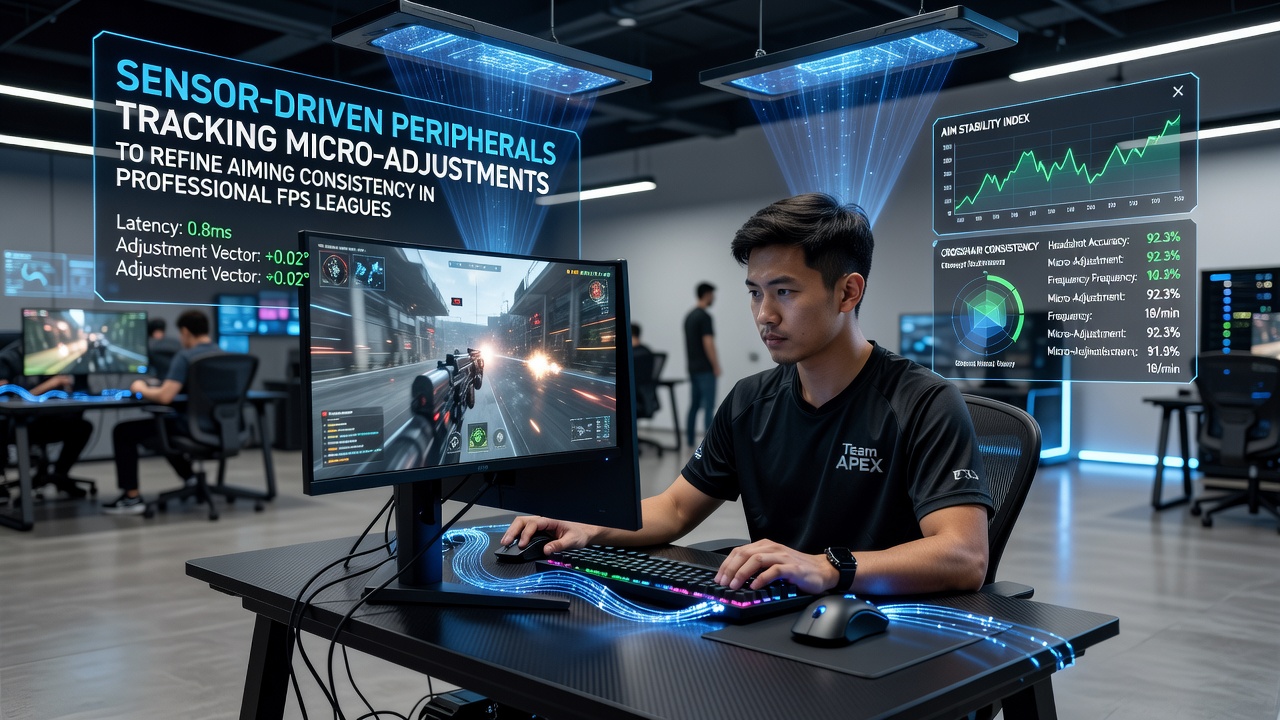
Precision Peripherals: Sensor Technology Tracking Micro-Adjustments in Professional FPS Aiming
Professional FPS leagues have integrated sensor-driven peripherals that capture fine-grained data on player movements, and these systems record micro-adjustments in mouse positioning to support consistent aiming across matches. Teams in circuits such as Counter-Strike 2 and Valorant deploy hardware equipped with high-resolution optical sensors, accelerometers, and gyroscopes that log thousands of data points per second during training sessions and live events.
Hardware Components and Data Collection
Modern gaming mice feature sensors capable of resolutions exceeding 30,000 DPI along with polling rates that reach 8,000 Hz, which allows continuous monitoring of subtle hand tremors and corrective flicks. Manufacturers incorporate additional modules that detect tilt angles and acceleration changes, and these readings feed into software platforms that generate heatmaps of aim patterns. Observers note that players in August 2026 tournaments have used updated firmware versions to synchronize peripheral data with in-game telemetry for post-match reviews.
Leagues require standardized equipment checks before matches begin, and officials verify sensor calibration to maintain fair data collection across competitors. Research from the University of Sydney indicates that consistent sensor calibration reduces variance in recorded micro-adjustments by measurable margins during extended play periods.
Analysis and Training Applications
Coaching staff review sensor logs to identify patterns where players overcorrect or underadjust during target acquisition, and this information guides customized drills that target specific movement inconsistencies. Software tools process the raw data into visual overlays that compare a player's aim trajectory against optimal benchmarks derived from aggregated league statistics. Teams have adopted these systems to refine muscle memory through repetitive exercises that emphasize controlled micro-corrections rather than broad sweeps.
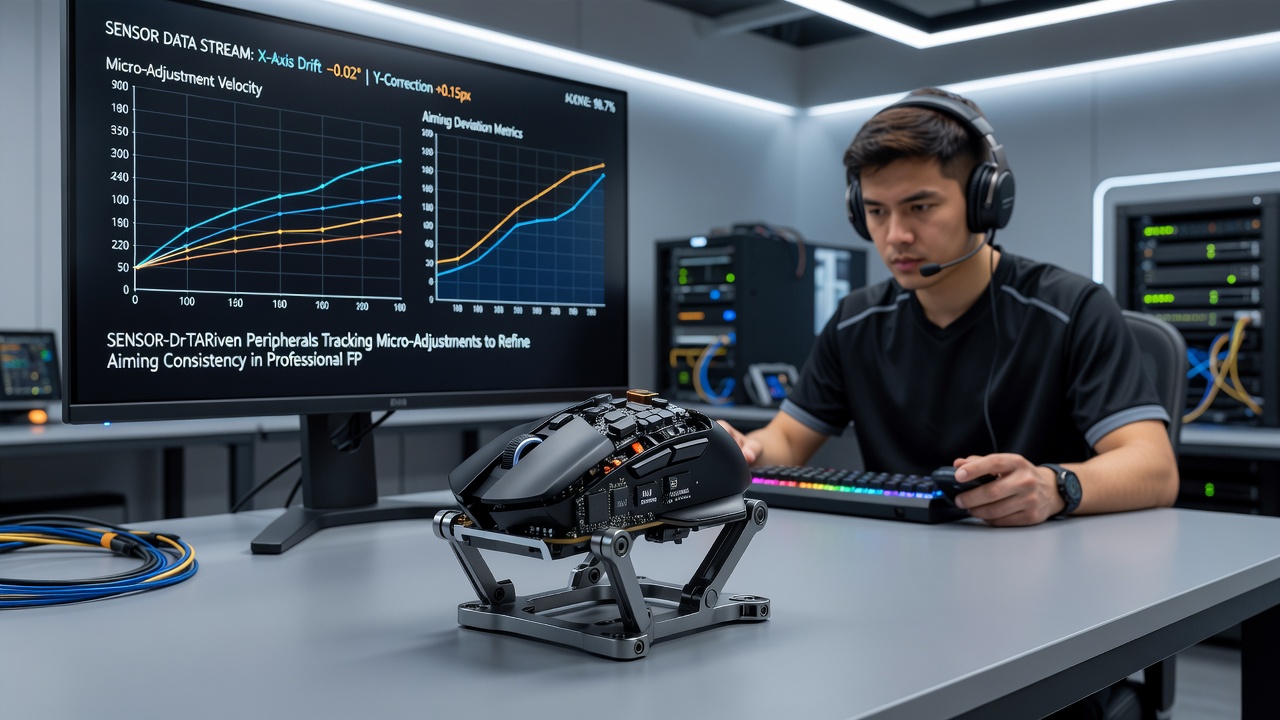
Data from major events shows that players who incorporate sensor feedback into daily routines achieve tighter grouping in aim practice scenarios, and figures from industry reports confirm adoption rates above 70 percent among top-tier organizations by mid-2026. Analysts cross-reference peripheral outputs with eye-tracking studies to build comprehensive profiles of aiming mechanics, and these profiles help isolate factors such as grip pressure variations or wrist angle shifts that influence shot placement.
Integration with League Standards
Professional circuits enforce guidelines that permit sensor-equipped peripherals while prohibiting unauthorized modifications that could alter data integrity, and compliance teams conduct random audits throughout tournaments. External bodies like the European Esports Federation have published frameworks for data handling that emphasize player consent and secure storage of performance metrics. In August 2026, several North American leagues updated their equipment policies to include mandatory sensor calibration logs submitted prior to each stage of competition.
Training facilities now feature dedicated stations where athletes connect their devices to centralized systems that compile longitudinal records, and these records allow comparison of aiming consistency across different maps and weapon types. Studies conducted by research groups at institutions in Canada have linked regular sensor-based feedback to reduced variability in crosshair placement during high-pressure scenarios.
Future Developments and League Impact
Developments in haptic feedback integration promise to deliver real-time cues based on detected micro-adjustment deviations, and prototypes tested in controlled environments have shown potential for immediate corrective prompts during practice. League organizers continue to explore partnerships with hardware firms to standardize sensor protocols across events, which would streamline data comparison between regions and seasons. Figures reveal that investment in these technologies has grown steadily as organizations seek measurable edges in team performance metrics.
Conclusion
Sensor-driven peripherals provide detailed tracking of micro-adjustments that support refined aiming consistency in professional FPS environments, and leagues have incorporated these tools into training and regulatory frameworks. Data collection remains central to performance analysis while maintaining competitive balance through established standards. Continued advancements position these systems as foundational elements in the technical infrastructure of elite competitions.