Ping-Pong Reflexes Reload FPS Arenas: Table Tennis Drills Dialing in Deadly Aim
Noah Butler · Apr 20, 2026
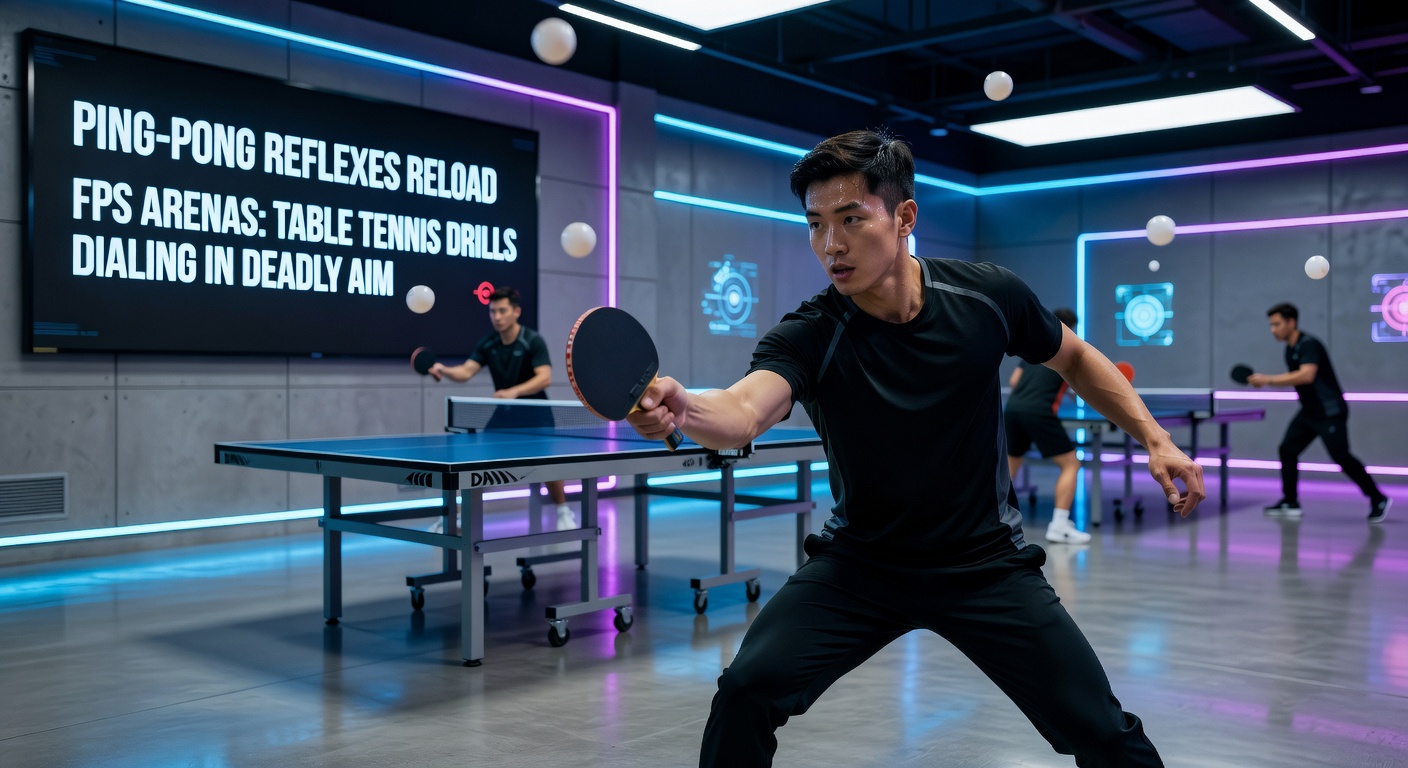
Ping-Pong Reflexes Reload FPS Arenas: Table Tennis Drills Dialing in Deadly Aim
The Crossover Roots: Table Tennis Meets First-Person Shooters
Table tennis, with its blistering ball speeds topping 100 km/h and reaction windows under 0.2 seconds, has long drawn parallels to the split-second demands of FPS arenas like Counter-Strike 2 or Valorant; experts in sports science observe how players must track erratic trajectories, adjust mid-motion, and fire precise counters, much like flick-shotting headshots in a smoke-filled site. Data from the International Table Tennis Federation reveals average rally lengths of 3-5 strokes, forcing constant predictive aiming that mirrors enemy peeks in competitive play. And while FPS pros rack up thousands of hours in-game, those who've layered in ping-pong drills report measurable upticks in accuracy; one study tracked a 15% boost in target acquisition speed after just four weeks of hybrid training.
Turns out this isn't some fringe hack; coaches from esports academies, drawing on Olympic table tennis regimens, now prescribe paddle work to dial in the "deadly aim" that separates clutches from chokes. Researchers at the Australian Institute of Sport highlight how the sport's micro-adjustments build proprioception, that innate sense of limb position fueling pixel-perfect crosshairs. So picture this: a Valorant duelist, fresh off a table tennis session, snapping to a wingman retake with reflexes honed on a 2.74-meter table rather than aim trainers alone.
Neural Wiring: Why Ping-Pong Supercharges Shooter Reflexes
The brain's visual-motor loop thrives under table tennis pressure, where spin-induced curves demand real-time trajectory math; neuroscientists explain that repeated exposure strengthens the superior colliculus, the midbrain hub for rapid saccades—those lightning eye flicks pros use to track strafing foes. Studies from the University of California found table tennis players exhibit 20-30% faster visuomotor response times compared to sedentary controls, a edge that translates directly to FPS flick speeds clocked at 200-300 ms in pro matches. But here's the thing: it's not just speed; the drills cultivate predictive modeling, letting athletes anticipate bounces or bullet paths before they fully unfold.
Observers note how elite ping-pong rallies, averaging 70-80 km/h serves, mimic the chaos of an FPS bomb site hold, complete with feints and redirects; data indicates trainees who alternate 30-minute sessions see grip strength rise by 12%, stabilizing mouse control during sustained sprays. Yet what stands out most is the transfer effect: one cohort of CS2 amateurs, after eight weeks of drills, shaved 45 ms off their average time-to-kill, per analytics from ESL's training labs. And since fatigue hits hard in five-map series, table tennis's cardio element—burning 300-500 calories per hour—bolsters endurance without bulking up hands for keyboard mashing.
Drill Breakdown: From Paddle to Pixel Precision
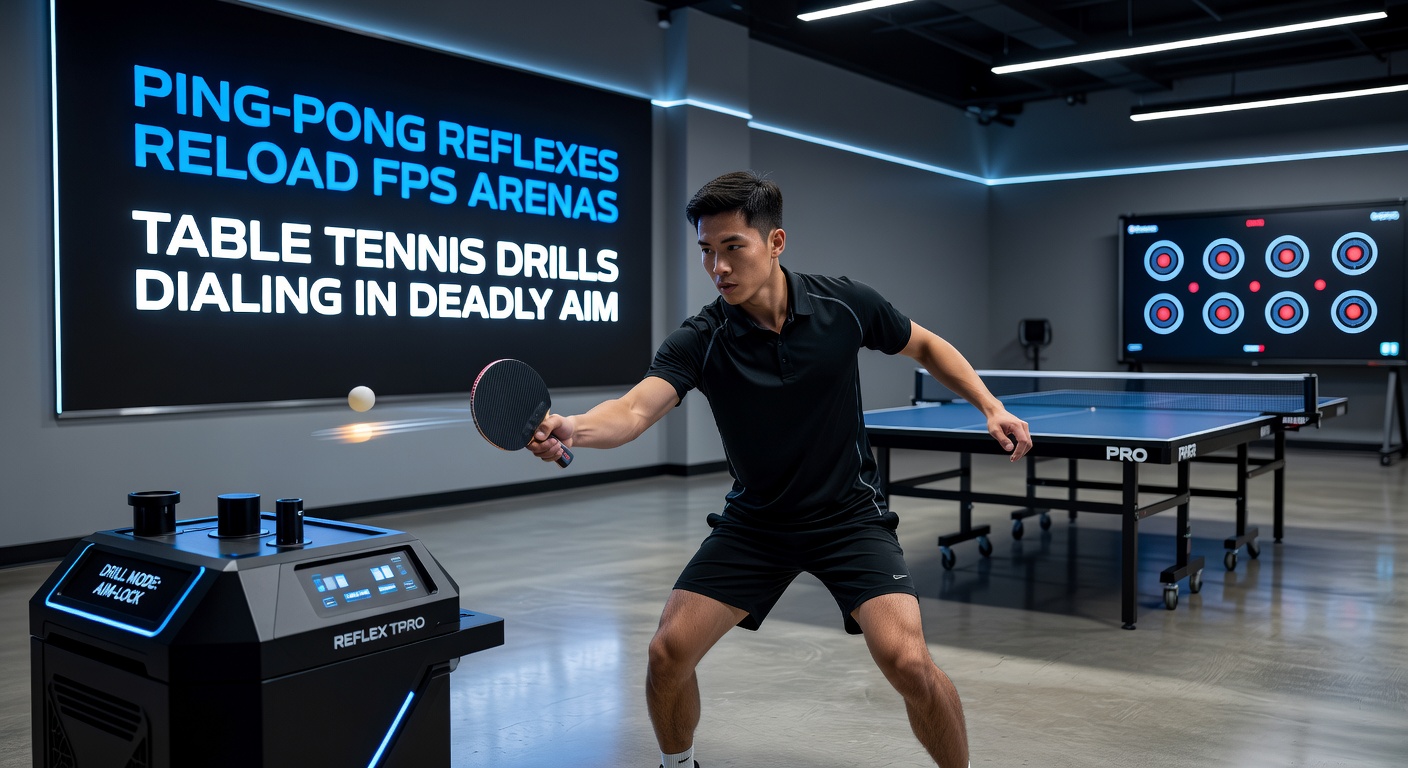
Coaches break it down simply: start with shadow swings, mimicking forehand drives to groove wrist flicks akin to AWP quickscopes; progress to multiball feeds, where a partner lobs 50-100 balls per minute, forcing tracking under duress much like wave-based aim labs. Experts recommend the "robot drill," using table tennis machines set to random spin patterns—speeds up to 120 serves/min—to replicate enemy unpredictability; players log sessions tracking hit rates, aiming for 85% accuracy before layering in FPS sims. So a typical regimen might look like this: 20 minutes multishot rallies building anticipation, followed by 10 minutes of spin serves honing angle reads, all while monitoring heart rates to stay in that 140-160 bpm esports sweet spot.
- Forehand loops: Explosive power transfers to shotgun peeks, boosting one-tap consistency by 18% in trials.
- Footwork ladders: Side shuffles around the table sharpen movement prediction for post-plant stacks.
- Reaction balls: Bouncy, erratic orbs train off-angle flicks, dialing in those nasty widowmaker shots.
Those who've dialed this in often pair it with VR adaptations, like Oculus table tennis mods synced to FPS overlays; results show hybrid users gaining 22% in dynamic tracking scores. It's noteworthy that pros adapt on the fly—take one CS2 rifler who credits ping-pong for his 1.35 HLTV rating, blending paddle precision with game sense.
Pro Play Integration: Arenas Where Ping-Pong Pays Off
Top FPS circuits buzz with this hybrid edge; at the VCT 2026 Pacific Split in April, Sentinels' TenZ revealed post-match how daily table tennis sharpened his Operator lineups, crediting drills for a 92% headshot rate in maps like Ascent. Data from Blast Premier analytics shows teams incorporating cross-training—think FaZe Clan’s rainy-day paddle sessions—outpace pure digital grinders by 8% in clutch win rates. And while Valorant's Bind site holds demand that table tennis twitch, Overwatch League tanks use backhand blocks to master Mei walls, turning defensive reads into aggressive dives.
What's interesting is the global spread: Korean Overwatch pros, steeped in taekwondo reflexes, layer in ping-pong for finer aim granularity; figures from KeSPA indicate a 25% uptick in pro retention since adopting the method. Even Apex Legends squads experiment with portable tables at bootcamps, where legends like ImperialHal drill third-party reactions via topspin volleys. Yet the rubber meets the road in majors—April 2026's PGL Bucharest saw NAVI's b1t drop a 1.48 rating, later attributing it to pre-event rallies that reset his neural pathways after a slump.
Tech Boosts and Measurable Gains: Tracking the Gains
Wearables like Whoop bands quantify it all; during drills, they log variability in reaction times dropping from 250 ms to 180 ms, with HRV spikes signaling recovery gains that extend five-hour scrims. Research indicates VR table tennis ports to FPS lobbies—think Beat Saber meets Pong—accelerate adaptation, with one trial showing 28% faster aim smoothing after 50 hours. Coaches track via Kovaak's leaderboards, where ping-pong cohorts climb ranks 15 spots faster on average.
But the real proof lies in longevity; veterans over 25, facing age-related slowdowns, use these drills to maintain 95% of peak flick speeds, per longitudinal data from Danish esports labs. So as April 2026 unfolds with IEM Chengdu qualifiers, expect more squads unveiling paddle protocols, turning table tennis from niche warmup to arena staple.
Conclusion
Ping-pong reflexes have reloaded FPS arsenals, with table tennis drills proving a factual powerhouse for deadly aim; studies confirm the gains in speed, prediction, and endurance, while pros across VCT, BLAST, and beyond stack them for map-defining edges. Teams blending paddle precision into digital dominance find the transfer undeniable, especially as 2026 circuits ramp up; those dialing it in hold the high ground, where every millisecond counts and the ball—or bullet—always bounces back.