Penalty Mind Games: Soccer Shootout Tactics Reshaping Esports Split-Second Calls
Hugo Schmitz · Jun 1, 2026
Penalty Mind Games: Soccer Shootout Tactics Reshaping Esports Split-Second Calls
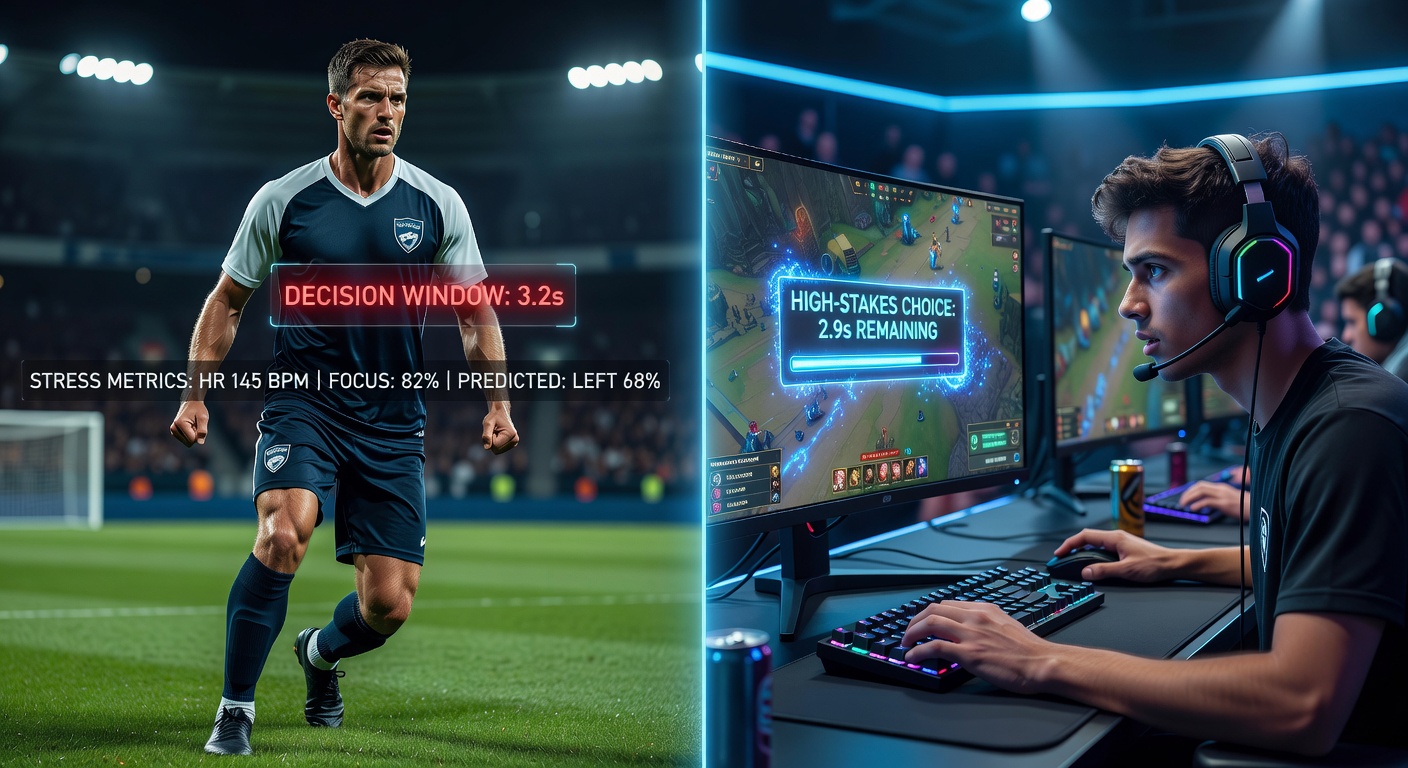
Researchers examining soccer penalty kicks have documented patterns where kickers favor upper corners while goalkeepers base dives on historical shot distributions and subtle body cues from the approaching player. These same cognitive processes surface in esports when competitors face compressed decision windows during clutch rounds in titles like Counter-Strike 2 and Valorant, where selecting an ability, rotation path, or engagement angle carries immediate match-altering consequences.
Core Psychological Mechanisms Shared Across Both Domains
Studies from the University of Queensland highlight how penalty takers experience heightened cortisol levels that narrow attentional focus yet impair fine motor control, leading to shots aimed too centrally or rushed in execution. Esports analysts tracking professional play observe parallel spikes in heart rate variability during overtime scenarios, where players must weigh risk-reward calculations in under 400 milliseconds according to data from the Australian Institute of Sport performance monitoring programs. Both environments force rapid suppression of emotional interference while processing opponent tendencies gathered from prior matches.
Statistical Patterns Driving Decisions
Penalty data compiled across major European leagues shows right-footed players direct 68 percent of kicks toward the goalkeeper's right, prompting keepers to anticipate that direction more frequently in shootouts. In esports circuits, similar predictive modeling appears in post-plant situations where defenders stack sites based on historical plant locations and attacker utility usage rates released in June 2026 tournament reports. Teams now integrate these datasets into real-time overlays that mirror the scouting sheets soccer coaches prepare before penalty phases.
Decision windows shrink further when fatigue accumulates, and observers note that late-match penalties exhibit higher miss rates tied to accumulated physical load, a pattern echoed in esports when players navigate final maps after multiple hours of competition. Research indicates that brief pre-action routines, such as consistent breathing cycles or visual fixation points, stabilize performance in both settings by anchoring attention away from outcome anxiety.
Training Protocols Crossing From Pitch to Pixel
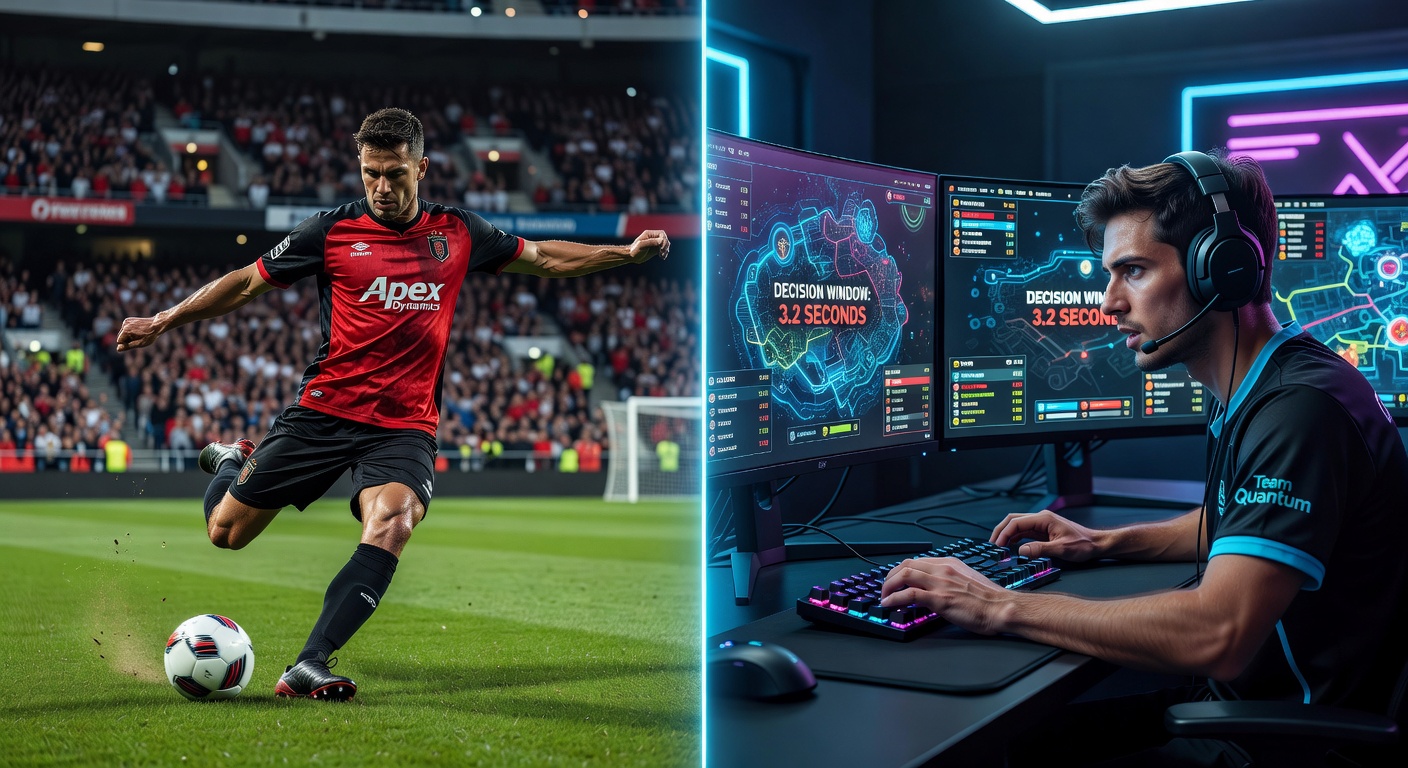
Coaching staffs in soccer have long employed video occlusion training that removes the ball flight phase so keepers practice reading early kinematic signals, and esports organizations have adopted comparable drills that pause gameplay footage at the exact frame before an opponent commits an ability. These sessions improve anticipation accuracy by measurable margins, with Canadian university labs reporting gains of 12 to 15 percent in reaction classification tasks after four weeks of repeated exposure. Players learn to filter noise and prioritize the most diagnostic cues, whether those involve hip orientation on a penalty run-up or crosshair placement shifts in a first-person shooter.
Team environments amplify these effects because collective pressure introduces additional social evaluation layers. Soccer squads that simulate crowd noise during practice penalties report better retention of technique under stadium conditions, while esports squads replicate tournament soundscapes during scrimmages to desensitize players to vocal distractions that accompany major events scheduled through mid-2026. The approach reduces variance in execution without altering the underlying decision architecture.
Technology Integration and Data Feedback Loops
Eye-tracking systems deployed by both soccer academies and esports performance centers reveal where attention lands during the critical pre-action interval, allowing coaches to identify and correct inefficient scanning patterns. When a penalty taker fixates too long on the goalkeeper rather than the target zone, subsequent accuracy declines; the same holds when an esports player locks vision on the minimap instead of the immediate threat vector. Real-time biofeedback now feeds into training software that flags these moments and prompts corrective micro-adjustments before the next repetition.
Regulatory bodies such as the European Gaming Federation have begun reviewing how performance analytics intersect with competitive integrity, issuing guidelines that distinguish permissible preparation tools from those that could confer unfair mechanical advantages. These frameworks parallel existing FIFA protocols governing video review of penalty incidents, ensuring that psychological preparation remains the primary differentiator rather than hardware augmentation.
Conclusion
Shared cognitive demands in soccer penalty situations and esports decision windows have prompted cross-domain adoption of occlusion drills, biometric monitoring, and statistical modeling that sharpen anticipation under time pressure. As datasets expand through 2026 tournaments, practitioners continue refining methods that stabilize performance when outcomes hinge on fractions of a second and single choices determine advancement or elimination.