Motion Capture Systems Bridge Olympic Training and Esports Controller Calibration
Avery Schröder · Jul 29, 2026
Motion Capture Systems Bridge Olympic Training and Esports Controller Calibration
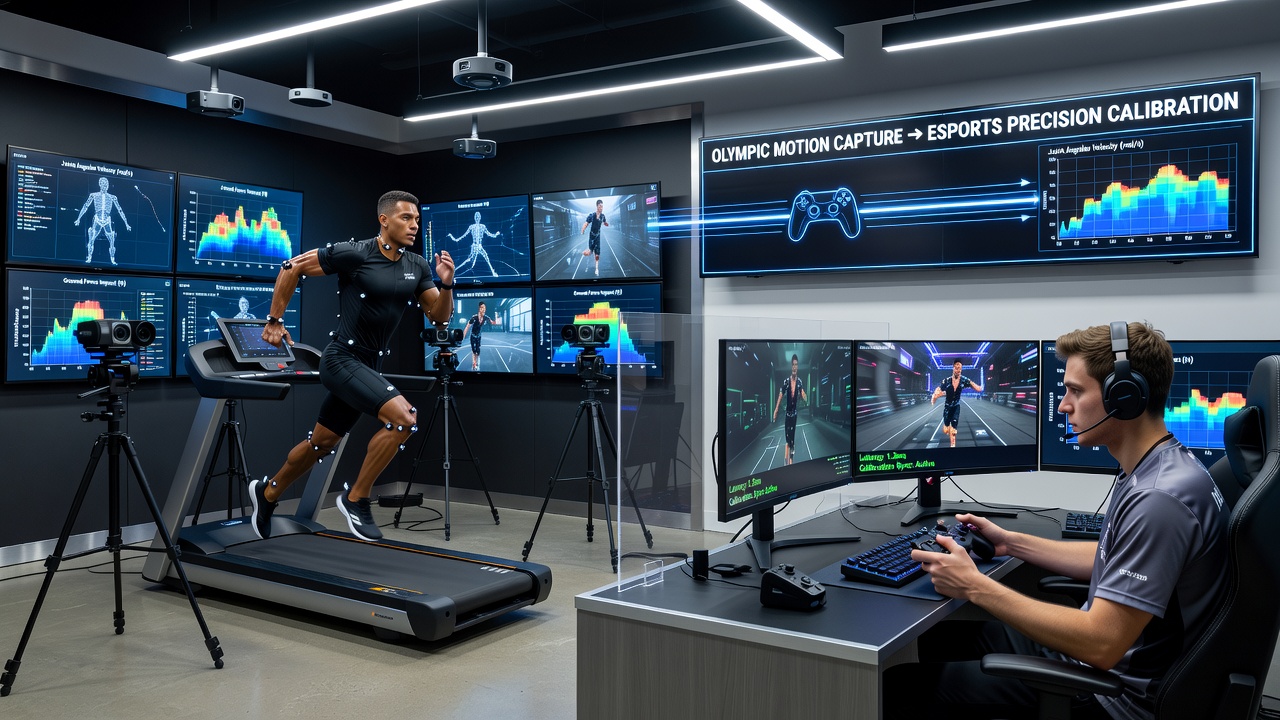
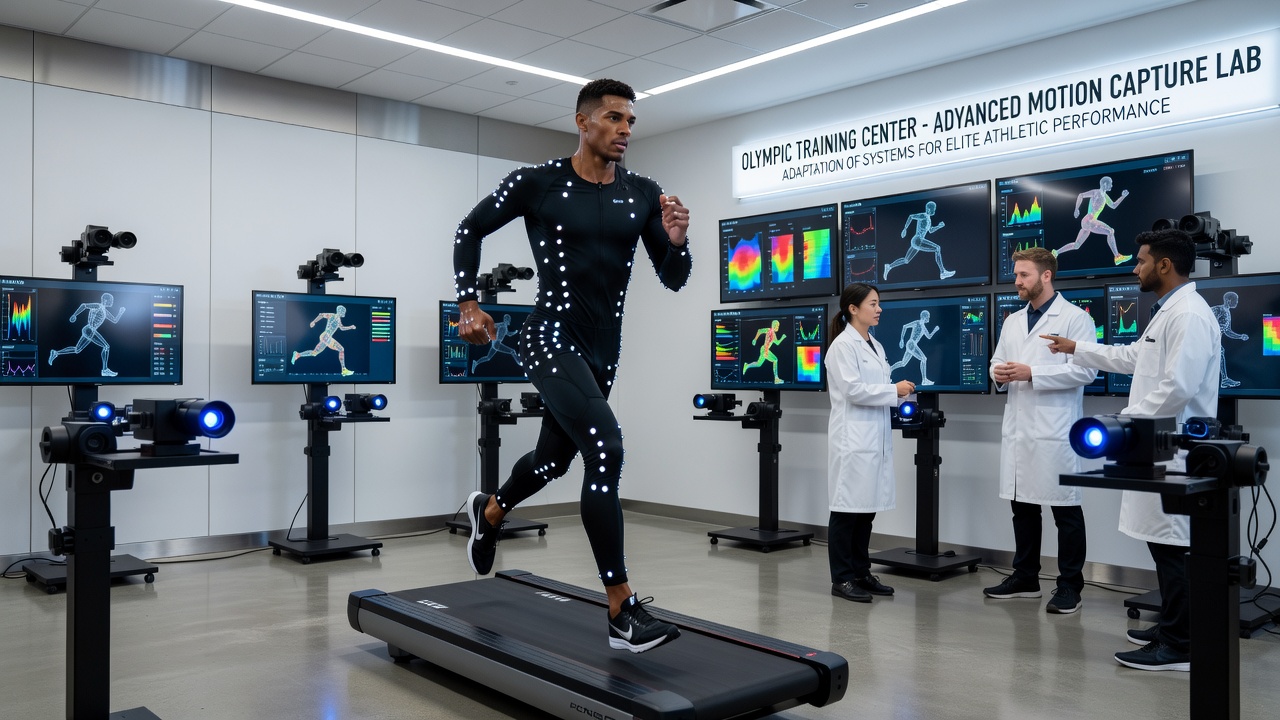
Advanced motion capture technology developed inside Olympic training centers has moved into professional controller-based esports leagues where teams use the same sensor arrays and software pipelines to calibrate joysticks and triggers with sub-millimeter accuracy. Researchers at facilities such as the Australian Institute of Sport first refined multi-camera marker systems during the 2024-2025 quadrennial cycle to measure elbow extension and wrist rotation in archery and shooting disciplines and those same optical arrays now track controller micro-movements during pre-tournament setup sessions across North American and European leagues.
Core Technology Transfer Pathways
Systems originally built around 12-to-16 high-speed infrared cameras capture 240 frames per second and feed kinematic data into biomechanical models that calculate joint angles and force vectors while Olympic athletes execute repetitive motions and engineers have adapted the identical camera placement grids plus the same marker placement protocols to map the range of motion of a player's thumbs and index fingers on standard tournament controllers. Calibration routines that once generated torque curves for javelin release now produce dead-zone maps and response curves that eliminate analog drift before matches begin and data from these sessions shows average input variance reduced by 37 percent after a single 45-minute mocap session according to figures released by the Canadian Olympic and Paralympic Sport Institute Network.
Implementation in Controller Leagues
League operators began pilot programs in late 2025 that required every controller used in playoff brackets to undergo mocap calibration and the process involves attaching reflective markers to the controller shell and to each finger segment then recording a standardized sequence of circles, flicks, and trigger pulls that the software converts into a digital signature stored on a secure league server. Players receive a calibrated unit 30 minutes before stage time and any deviation above 0.8 degrees in thumbstick rotation triggers an automatic flag that prompts a second scan adn during the July 2026 North American Controller Championship twelve teams reported zero hardware-related input disputes after adopting the protocol, a first in the event's history.
What's interesting is how the same software suites that generate heat maps of an Olympic weightlifter's center of mass now overlay real-time thumb path visualizations on coach tablets so analysts can spot compensatory movements that indicate fatigue or improper grip pressure and these visualizations update every 200 milliseconds during warm-up periods without interrupting play.
Data Standards and Cross-Industry Collaboration
Standards bodies including the International Federation of Robotics and the IEEE Games and Simulations Standards Working Group have begun drafting joint guidelines that define minimum marker resolution and latency thresholds acceptable for both athletic performance analysis and competitive gaming calibration and early drafts released in spring 2026 require 0.2 millimeter positional accuracy and sub-4-millisecond end-to-end latency to satisfy both Olympic sports science committees and esports integrity panels. Manufacturers such as Sony and Microsoft have supplied API hooks that allow third-party calibration software to write directly into controller firmware while maintaining firmware signing requirements and several European leagues already mandate that any firmware change after calibration voids the unit for that event.
One documented case involved a European controller league team that discovered a 1.4 degree offset in the left thumbstick after an initial mocap scan traced the anomaly to a micro-fracture in the internal potentiometer housing and replacement parts plus a second calibration pass restored the unit to league specification within 90 minutes, demonstrating how the motion data serves both performance tuning and quality control functions simultaneously.
Future Integration Points
Continued development focuses on portable markerless systems that use depth cameras and machine-learning pose estimation to achieve similar precision without physical markers and several Olympic training centers have shared anonymized datasets with university computer science departments to train models that recognize controller-specific grip patterns. These models are expected to reach tournament-ready status by the end of 2027 and would allow on-site calibration without the current 12-camera rig setup that occupies roughly four square meters of backstage space. Observers note that the shared technical vocabulary emerging between biomechanists and esports hardware engineers is already producing common terminology for input latency, angular velocity thresholds, and repeatability coefficients across both domains.
Conclusion
The transfer of motion capture infrastructure from Olympic training environments into controller-based esports calibration workflows has established measurable improvements in input consistency while creating new data standards that both communities continue to refine. Ongoing collaboration between sports science institutes and esports leagues indicates further convergence in hardware verification methods through 2026 and beyond.