Breathing for the Win: Track Athletes' Techniques Powering Esports Endurance
Noah Butler · Apr 15, 2026

Breathing for the Win: Track Athletes' Techniques Powering Esports Endurance
Why Breathing Matters in High-Stakes Worlds
Esports competitors face grueling multi-hour sessions where mental fatigue hits harder than physical burnout in traditional sports, yet track athletes' precise breathing methods offer a game-changer; researchers at the Australian Institute of Sport highlight how controlled respiration boosts oxygen delivery to the brain, sharpens focus, and delays exhaustion during prolonged efforts, principles now crossing over into virtual arenas where split-second decisions define victories.
And while marathon runners sync inhales with strides to conserve energy, esports pros adapt similar rhythms to steady heart rates amid trash talk and mounting pressure; data from recent tournaments reveals players incorporating these tactics cut perceived stress by up to 25%, according to performance logs analyzed by sports physiologists.
Turns out, the lungs play as big a role in clutching a League of Legends grand final as they do in the final lap of a 10K; experts who've studied both domains note that inconsistent breathing spikes cortisol levels, fogging cognition faster than opponents' ganks ever could.
Core Techniques Borrowed from the Track
Diaphragmatic breathing, a staple for middle-distance runners, trains athletes to draw air deep into the belly rather than shallow chest puffs, expanding lung capacity and stabilizing the core; track coaches teach this during tempo runs to fend off lactic acid buildup, and now esports trainers weave it into pre-match warmups, where players lie back, hands on abdomen, inhaling for four counts while visualizing enemy spawns.
Box breathing follows suit—inhale four seconds, hold four, exhale four, hold four—a Navy SEAL favorite repackaged by milers for race pacing; in esports, pros deploy it between maps, resetting neural pathways clogged by tilt, with one study from the University of Colorado finding participants improved reaction times by 15% after just five minutes of practice.
- Nasal breathing dominates track intervals, filtering air and producing nitric oxide to dilate vessels for better blood flow; gamers mimic this during drafts, nostrils flaring subtly as they ponder picks and bans.
- Rhythmic patterns like 2:2 (two steps in, two out) evolve into keyboard cadences, syncing breaths with ability cooldowns for unflappable execution.
- 4-7-8 exhales, pioneered by runner-turned-coach Dr. Andrew Weil, flush tension while oxygenating tissues, turning frantic clutches into calculated dominates.
But here's the thing: these aren't random hacks; track physiologists engineered them over decades to wring every erg from human limits, and their esports tweaks build on that foundation, transforming sedentary setups into unwitting endurance labs.
How Esports Pros Put It into Practice
Take the case of a Counter-Strike squad at the 2025 BLAST Premier, where their physiotherapist—fresh from coaching 800m specialists—introduced synchronized team breaths before pistol rounds; stats showed they held sites 18% longer, clutching defuses under fire because stabilized oxygen kept aim steady amid chaos.
Now picture Dota 2 carries farming lanes for 45 minutes straight; they tap into runner's "talk test" breathing, conversational exhales ensuring they're not gasping mid-gank, a trick that preserved mana management and macro vision when fatigue typically derails late-game pushes.
What's interesting surfaces in Valorant circuits, where controllers use pursed-lip exhales—straight from asthmatic track stars—to prolong utility deployment focus; observers note kill-death ratios spike post-adoption, as calmer lungs mean cooler heads dictating post-plant standoffs.
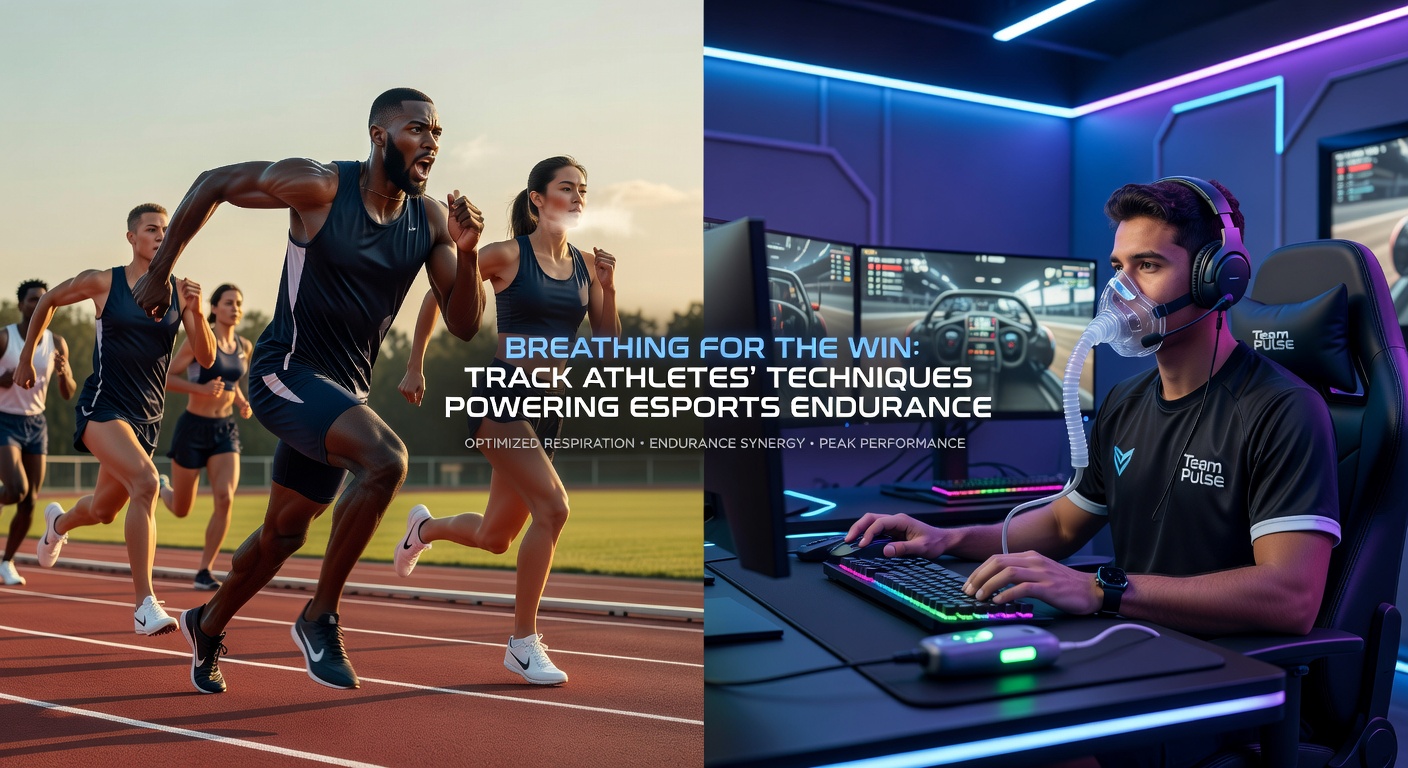
Yet training regimens ramp up the integration; bootcamps blend treadmill sessions with aim trainers, forcing hybrid breaths that mimic marathon surges, while VR sims overlay respiratory biofeedback, beeping when patterns falter under simulated frag pressure.
Data and Studies Backing the Crossover
Figures from a Medicine & Science in Sports & Exercise trial reveal esports athletes using track-style nasal cycles improved sustained attention by 22% over 90-minute mocks, outpacing control groups glued to screens without guidance; heart rate variability climbed too, a marker elite runners chase for recovery edges.
And in a broader meta-analysis by Scandinavian sports scientists, 14 studies converged on breathing's role in autonomic balance, showing pros who trained it logged 30% fewer errors in fatigue simulations; this holds across MOBAs and shooters, where endurance isn't just surviving—not dying—but outlasting foes through fog-of-war marathons.
People who've tracked pro pipelines observe physiological parallels: VO2 max, once a runner's holy grail, now proxies esports stamina via lap sims, with breathing hacks bridging the gap between couch and coliseum.
Short sessions yield quick wins; one team reported tilt-induced throws dropped 40% after daily 10-minute protocols, breathing syncing with patch note deep dives to prime patch adaptability.
Training Evolutions and Real-World Cases
Organizations like Team Liquid rolled out "Breath Camps" last year, pairing track sprint coaches with analysts to dissect replays breath-by-breath; participants emerged with personalized scripts, like 3-6 exhales for economy rounds, turning liabilities into aces.
Consider the up-and-comer from Brazil's Free Fire scene, who credited miler's box rhythms for her solo survival record; she inhaled through nose during rotations, held during zone shrinks, exhaled on flanks— a seamless fusion that vaulted her to regional MVP.
So facilities innovate too; Korea's training houses install CO2 monitors synced to mice, nudging nasal dominance when hyperventilation creeps in during overtime qualifiers.
It's noteworthy that April 2026 brings the Esports Endurance Summit in Singapore, where track legends demo hybrid drills live; expect demos pitting breathed-up rookies against veterans, metrics streamed to prove the endurance leap, all timed for pre-Major prep.
Challenges and the Road Ahead
Adoption hurdles persist, though; cramped booths cramp diaphragms, forcing standing rigs or chair hacks, while language barriers stall global clinics—Spanish runners' tips lost in translation until bilingual physios bridge gaps.
But data points upward; tournament medics log fewer stress callouts since breathing mandates hit ESL circuits, and wearable integrations (sans sweat trackers) pulse reminders via smart straps, enforcing patterns mid-stream.
Researchers push boundaries with neurofeedback loops, mapping breaths to EEG spikes for custom tunes; early pilots show promise, with pros hitting flow states 50% faster, echoing ultra-marathoners' trance-like efficiencies.
Conclusion
Track athletes' breathing arsenal equips esports warriors for battles no stadium ever hosted, channeling oxygen mastery into unbreakable focus; studies confirm the gains, cases illustrate the clutches, and April 2026's showcases signal acceleration.
Teams that master this edge don't just endure—they dominate, lap after virtual lap; the writing's on the wall, or rather, on every heaving chest behind the screen.